- Flooring
The Signature of Wood: Understanding Hardwood Flooring Grain Patterns
August 30, 2025
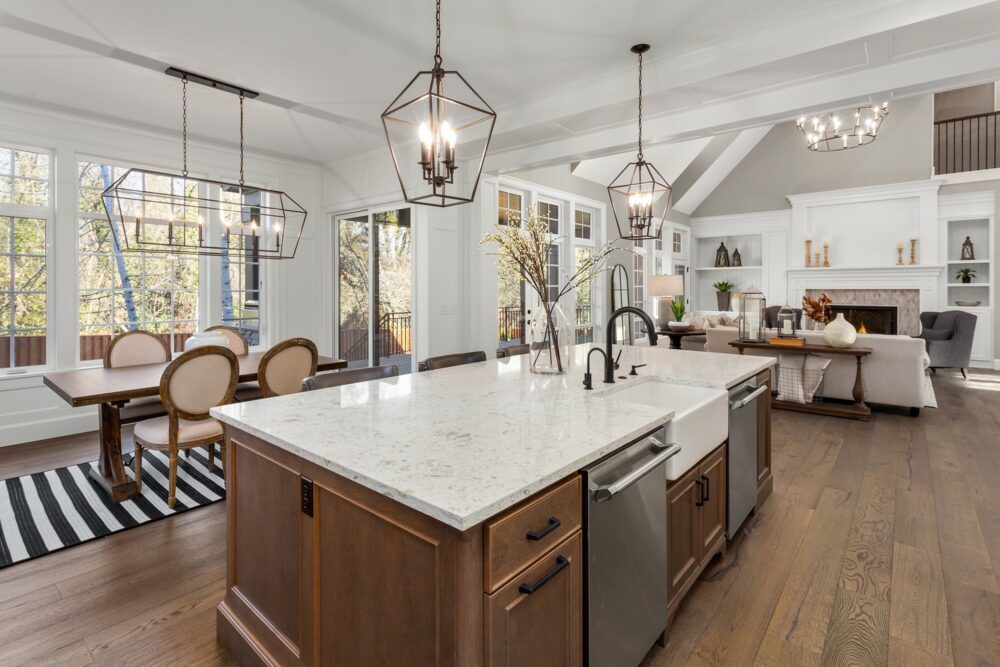
When choosing hardwood flooring for your home in our showroom in Denton, or surrounding areas like Flower Mound, Frisco, and Southlake, you’re investing in a material renowned for its natural beauty, warmth, and durability. While wood species and stain color often take center stage, another critical characteristic—the hardwood flooring grain—plays an equally vital role in defining the floor’s aesthetic, texture, and even its performance. Understanding the different hardwood grains and how they impact the overall look of your floor is key to selecting the perfect foundation for your interior design.
At The Design House, we believe in helping you choose every element of your home with confidence and clarity. As your home interior transformation specialists in our showroom in Denton, we offer a wide selection of hardwood flooring, and our experts are here to explain the nuances of hardwood grains to ensure your floor is exactly what you envision.
What is Hardwood Flooring Grain?
The “grain” of wood refers to the direction, size, and appearance of the wood fibers that grow within a tree. When a log is cut into planks, these fibers reveal distinctive patterns, which we commonly call the wood grain.
The type of cut used to mill the wood, along with the specific species of tree, significantly influences the resulting hardwood flooring grain pattern and how it looks on your floor.
The Main Different Hardwood Grains (Based on Sawing Method):
The way a log is cut fundamentally dictates the appearance of the hardwood flooring grain:
Plain Sawn (or Flat Sawn)
- How it’s Cut: This is the most common and economical way to cut lumber. The log is passed through the saw tangentially, cutting across the growth rings.
- Grain Appearance: Characterized by a “cathedral” or “flame” pattern of wide, sweeping arcs and often pronounced knots. It showcases the most variety in grain pattern.
- Characteristics:
- Visual Impact: High degree of visual character due to the dramatic grain patterns.
- Stability: Tends to expand and contract more across its width with changes in humidity, making it slightly less dimensionally stable than other cuts. This can sometimes lead to more cupping or crowning in extremely fluctuating environments.
- Yield: Produces the most usable lumber from a log, making it more affordable.
- Best For: Homes seeking a traditional, rustic, or classic look with a lot of natural wood character. Ideal for those who appreciate the unique beauty of each plank.
Quarter Sawn
- How it’s Cut: The log is first cut into quarters, and then each quarter is sawn perpendicular to the growth rings, creating boards where the grain runs mostly parallel.
- Grain Appearance: Features straight, parallel lines running the length of the board. You’ll often see distinct “ray flecks” or “medullary rays,” which are shimmering, ribbon-like patterns that are particularly prominent in oak.
- Characteristics:
- Visual Impact: More uniform, linear, and refined look compared to plain sawn. The ray flecks add a unique visual interest.
- Stability: Highly dimensionally stable, meaning it expands and contracts less with changes in humidity. This makes it a great choice in environments with significant moisture fluctuations.
- Yield & Cost: Produces less lumber from a log and is more labor-intensive to cut, making it typically more expensive.
- Best For: Craftsman, Mission, Arts & Crafts, and traditional designs where a linear, elegant, and stable floor is desired.
Rift Sawn
- How it’s Cut: This is the most expensive and least common cut. Boards are cut at a precise 30-45 degree angle to the growth rings, ensuring consistent vertical grain.
- Grain Appearance: Features extremely straight, consistent, and tight linear grain lines with almost no visible “cathedral” patterns or ray flecks.
- Characteristics:
- Visual Impact: Ultra-sleek, clean, and modern. Provides a very contemporary and uniform look.
- Stability: The most dimensionally stable cut of wood, showing minimal expansion or contraction.
- Yield & Cost: Produces the most waste from a log, making it the most expensive option.
- Best For: Modern, contemporary, and minimalist designs where a linear, uncluttered, and uniform aesthetic is paramount.
Other Aspects of Hardwood Grains:
Beyond the sawing method, other characteristics define different hardwood grains:
- Open Grain vs. Closed Grain:
- Open Grain: Woods like oak, ash, and hickory have larger pores, resulting in a more textured, pronounced, or “open” grain. These often accept stain more unevenly, highlighting the grain.
- Closed Grain: Woods like maple, cherry, and birch have smaller, tighter pores, leading to a finer, more subtle, or “closed” grain. They tend to have a smoother appearance and accept stain more uniformly.
- Figure: This refers to unusual or decorative patterns in the wood grain that are not typical. Examples include:
- Bird’s Eye: Small, localized indentations resembling tiny eyes, primarily found in maple.
- Curly/Flame/Fiddleback: Wavy, undulating patterns that appear to shimmer, often seen in maple or cherry.
- Burl: Swirling, interlocked grain patterns caused by abnormal growth, creating highly decorative and unique visuals.
- Tiger Stripe: Distinct dark streaks that resemble tiger stripes.
Impact of Hardwood Grains on Durability and Style:
- Durability: While the hardness of the wood species is the primary factor for dent and scratch resistance, the grain pattern can influence how visible these imperfections are. Floors with more pronounced, varied grain (like plain sawn oak) tend to hide minor dents and scratches better than very uniform, subtle grains (like rift sawn maple). Quarter-sawn and rift-sawn woods are generally more dimensionally stable, making them less prone to gapping, cupping, or crowning due to humidity changes.
- Style:
- Rustic/Farmhouse/Traditional: Plain sawn with its pronounced “cathedral” grain and knots is a natural fit.
- Transitional/Classic: Quarter sawn with its linear grain and ray flecks offers a refined, timeless look.
- Modern/Contemporary/Minimalist: Rift sawn with its super straight, consistent lines creates a sleek, understated foundation. Closed-grain woods also align with this aesthetic.
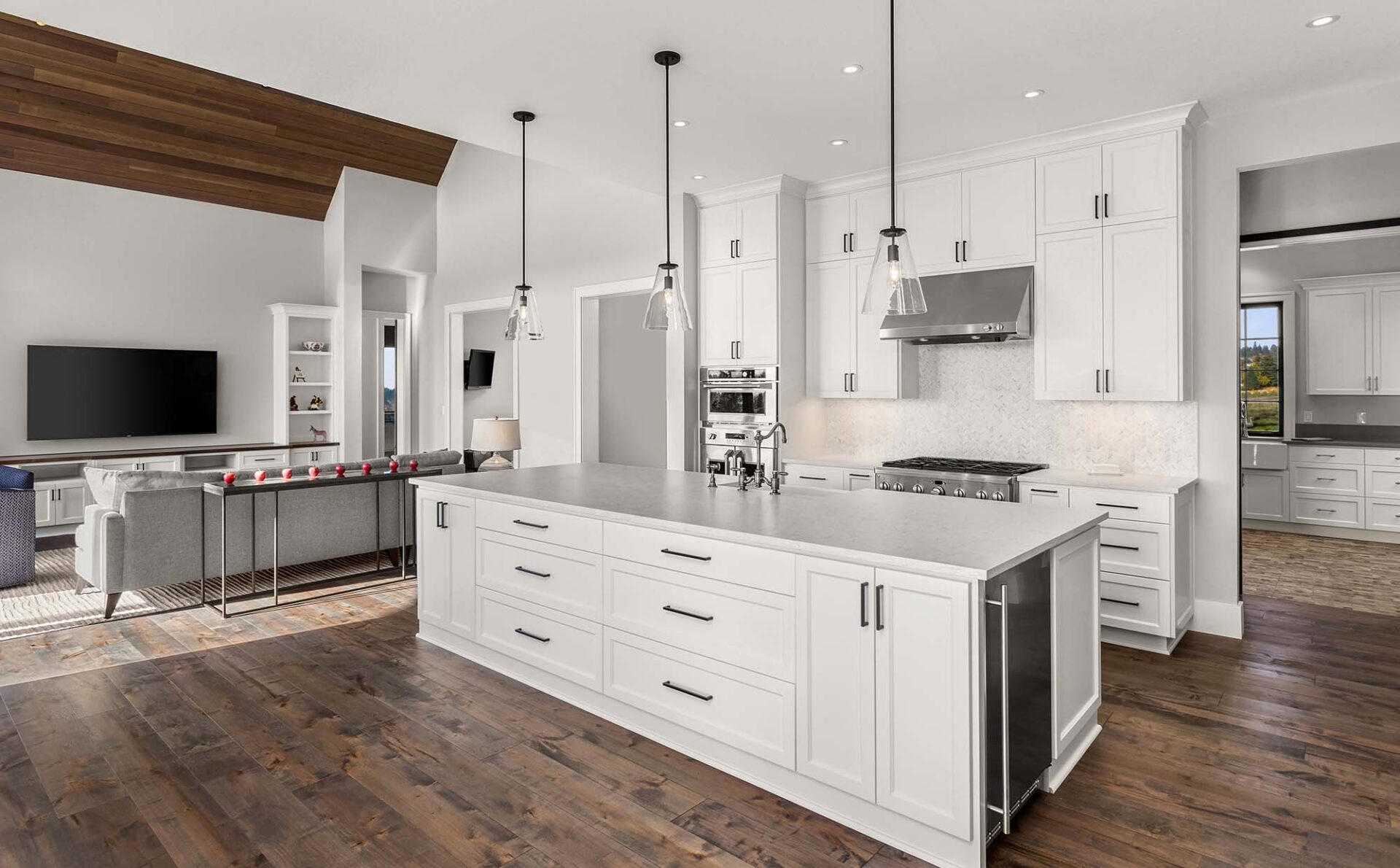
Discover the Perfect Hardwood Flooring Grain for Your Home at The Design House!
Ready to select hardwood flooring that perfectly captures your style and stands the test of time? Understanding hardwood flooring grain is essential to making an informed decision. At The Design House, our extensive selection of hardwood floors showcases all the different hardwood grains, and our expert team is here to help you find the ideal match for your aesthetic and lifestyle. Visit our showroom location in our showroom in Denton.
We strive to be the best provider of superior design, quality products, installation and build services throughout our showroom in Denton. We add value for our customers through foresight, integrity, and excellent performance, serving with character and purpose that brings honor to God. We’re a local family living out our dream of being your home interior transformation specialists, ensuring everything you need is right here in your own backyard. Call or Visit The Design House.
Our Service Areas
We proudly service the areas of Argyle, Aubrey, Carrollton, Corinth, Denton, Flower Mound, Frisco, Justin, Krum, Lake Dallas, Lewisville, Little Elm, Pilot Point, Ponder, Roanoke, Sanger, The Colony, Colleyville, Crowley, Grapevine, Haslet, Hurst, Keller, Southlake, Celina, Frisco, McKinney, Plano, Bridgeport, and Decatur, TX.
- Design
- hardwood
- Remodel