- Flooring
Hardwood Installation Methods: Glue-Down vs. Nail-Down
May 15, 2025
Hardwood Installation Methods: Glue-Down vs. Nail-Down
Hardwood flooring is one of the most sought-after upgrades for any home. It brings natural beauty, timeless style, and long-lasting durability to your space.
But to get the full benefit of your hardwood floors, proper installation is essential. The method used to install your flooring doesn’t just affect how it looks on day one, it can also impact how it wears over time, how it feels underfoot, and how well it handles changes in your environment.
Two of the most common installation methods are glue-down and nail-down. Each has its own advantages, and understanding the differences can help you make the right choice for your home.
At The Design House in Denton, TX, we’re here to help you navigate these options with confidence.
Choosing the Right Installation Method for Your Home
There’s no one-size-fits-all answer when it comes to installing hardwood flooring. Several factors, such as the type of wood, your home’s subfloor, and your budget, will influence which installation method is right for you. Below are some of the most important considerations to keep in mind.
Type of Hardwood Flooring
The type of hardwood you choose plays a major role in determining the best installation method. Solid hardwood is generally best installed using the nail-down method, as it’s thick and rigid enough to handle nails without splitting. Engineered hardwood, which has a layered construction, is more versatile. Thinner engineered boards, in particular, often benefit from the glue-down method, especially in situations where subfloor compatibility or pattern complexity is a concern.
Different Subfloor Types
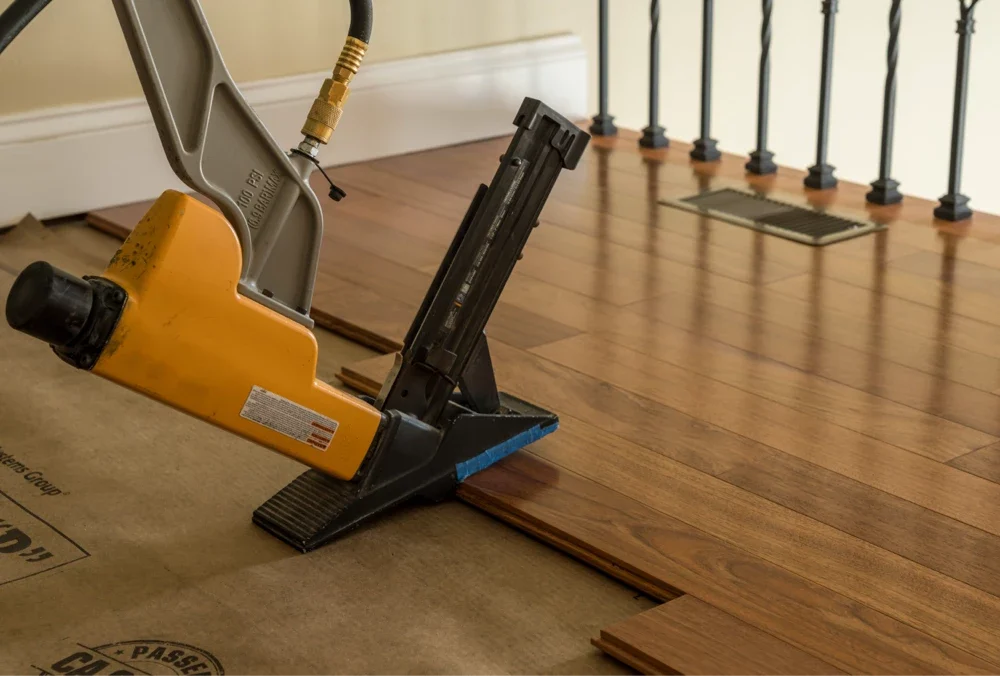
Your existing subfloor will also guide your installation method. Nail-down installations require a wood-based subfloor, such as plywood or OSB, to secure the nails or staples. If your home has a concrete slab, glue-down installation is typically the better choice, since nails won’t hold in concrete. Subfloor condition matters too—uneven surfaces must be leveled before installation, but glue-down floors tend to be less forgiving of imperfections than nail-down systems.
Costs and DIY Difficulty
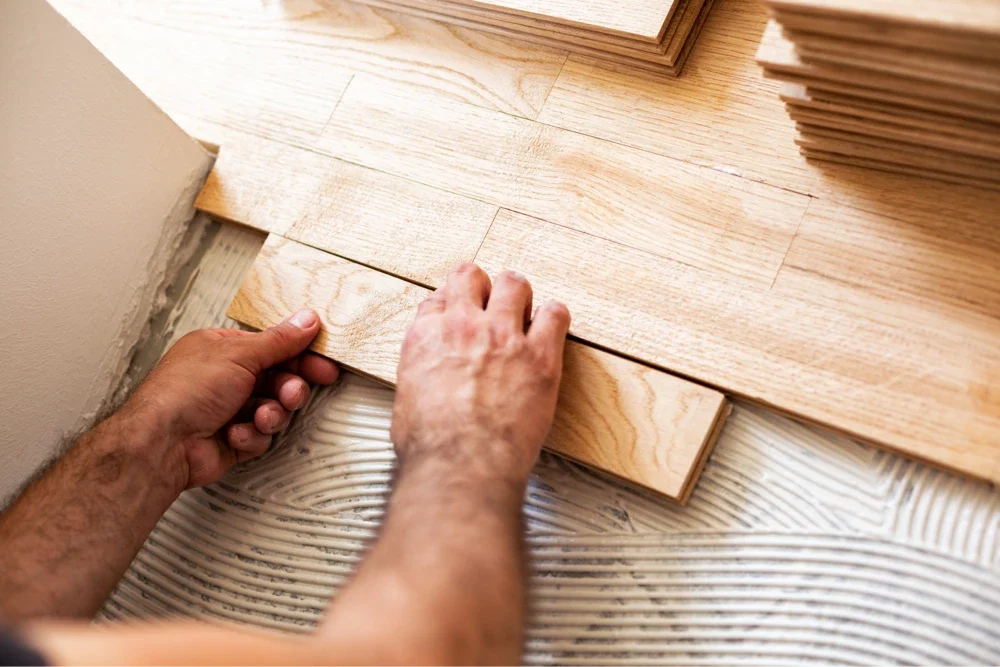
Glue-down installations are generally more labor-intensive and require careful adhesive application, which may be challenging for DIY projects. Nail-down flooring, while still requiring skill and the right tools, is often viewed as more accessible for experienced DIYers. In terms of cost, glue-down floors may be more expensive due to adhesive materials and additional subfloor preparation. Nail-down floors can sometimes be more budget-friendly, especially if no additional materials are needed.
Expansion and Contraction
All hardwood flooring reacts to changes in humidity and temperature. Nail-down floors allow for more natural expansion and contraction, which can result in slight gaps or shifting over time. Glue-down floors, on the other hand, are more stable once installed, as the adhesive limits movement. Regardless of the method you choose proper acclimation of the flooring before installation is essential to minimize seasonal movement.
Underlayment and Vapor Barrier
Underlayment requirements vary between the two methods. Glue-down floors typically do not need underlayment unless specified by the manufacturer, though a moisture barrier is essential over concrete to prevent damage. Nail-down floors often include an underlayment to manage moisture, reduce sound, and add a layer of cushion. If sound dampening is a priority, both methods can be adapted with appropriate products, but glue-down tends to be quieter by design.
Visual Impact and Underfoot Feel
The way a floor looks and feels can be affected by the installation method. Nail-down floors may show occasional nail holes if not installed carefully, although these can often be filled or concealed. Glue-down installations leave no surface marks, resulting in a clean, uninterrupted look. In terms of comfort, glue-down floors typically feel more solid and stable underfoot, while nail-down floors might have a slightly more flexible feel, depending on the subfloor beneath.
Why Choose The Design House for Your Hardwood Flooring Needs
At The Design House, we specialize in hardwood flooring and offer a wide selection of quality materials from trusted brands like Shaw. Whether you’re considering a glue-down or nail-down installation, our expert team will guide you every step of the way.
Our professional installers ensure that your flooring is not only beautiful but also built to last. We take the time to evaluate your home, subfloor, and lifestyle needs so you get a flooring solution that performs as well as it looks.
Visit us at The Design House in Denton, TX or contact us today to schedule your hardwood consultation.
- Hardwood Flooring, Floor Installation, Glue Down Installation, Nail Down Installation, Flooring Methods, Home Improvement